
Introduction: A New Era of Intelligence
For many years, the world of technology was built on Predictive AI. If a company wanted to know what a customer might buy or if the stock market might change, they looked at the past. They used math to find patterns in old data and tried to guess what would happen next. It was like looking through a digital rearview mirror to help steer the car forward.
But recently, we have entered a much more exciting time. We have moved from machines that just analyze data to machines that create it. This is the era of Generative AI (GenAI). It is no longer just about finding a trend; it is about solving complex problems and making entirely new things—like writing code, creating beautiful images, or even composing music. For today’s professional, GenAI is like having a “Digital Partner” that can reason, learn, and help you get much more done in less time.
How AI Evolved: From Simple Rules to Brain-Like Networks
To understand the power of GenAI, we need to see how computers “learn.” In the beginning, Artificial Intelligence was very rigid. It followed “Supervised” models. You had to show the computer thousands of labeled examples. If you showed it 10,000 pictures of a cat, it eventually learned to identify a cat. It was helpful, but the computer couldn’t think “outside the box.”
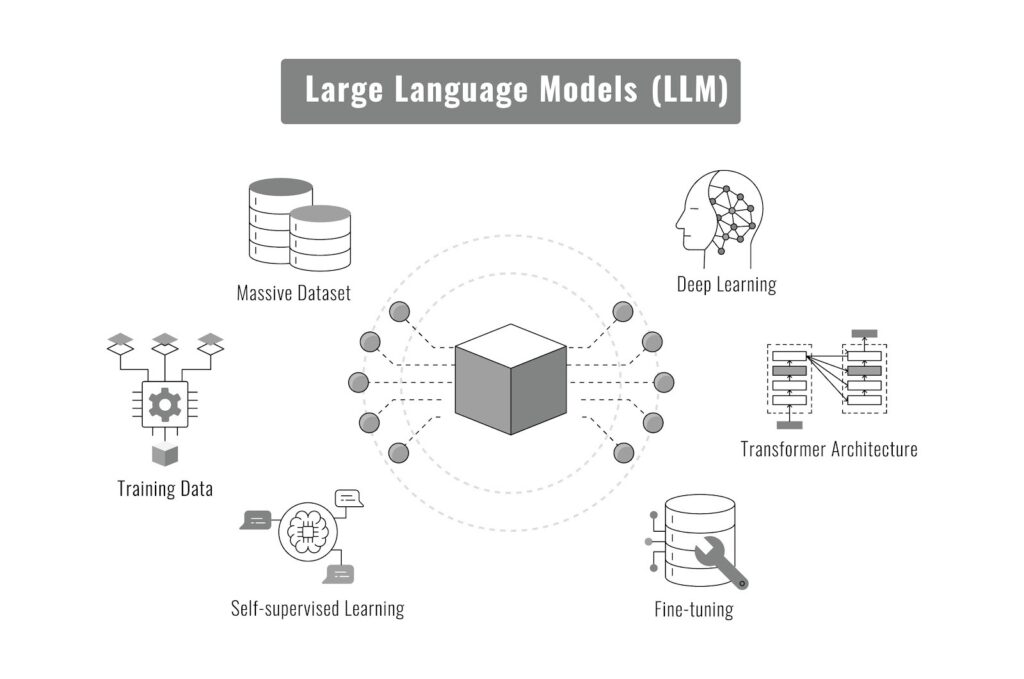
The big change happened with Deep Learning. Scientists created “Neural Networks” that act a little bit like the human brain. These systems have many layers that help them learn from their own mistakes. They keep adjusting themselves until they get the right answer.
The real “explosion” of GenAI happened with something called the Transformer architecture. This allowed AI to understand the context and logic of language on a massive scale. We moved from simple “if-this-then-that” rules to Agentic AI. These are systems that don’t just follow a script; they can actually think through a long list of steps to finish a difficult goal.
The Recent Evolution: From ML to LLMs
To understand where we are going, we have to look at how we got here. Traditional Machine Learning (ML) is often a “supervised” process. You train a model on “known past data” to map an input to an output. If the input is “vibration sensor data,” the output is “90% chance of bearing failure.” It was effective, but it was rigid.
The evolution into Deep Learning introduced multiple layers of neural networks—Artificial Neural Networks (ANNs), Convolutional Neural Networks (CNNs), and Long Short-Term Memory (LSTM) networks—that could handle more complex, recursive iterations. These models started to “learn from mistakes” and correct themselves toward a perfection of operations. However, they were still “black boxes.” They could tell you that a machine was failing, but they couldn’t explain why in a way a human could easily digest.
Then came the “GenAI” breakthrough. By leveraging Large Language Models (LLMs) and transformer architectures, AI moved beyond numbers and into the realm of logic and language. This is where Artificial Intelligence began to “extend rational reasoning.” We are now seeing the rise of “Agentic AI” workflows, where the system doesn’t just monitor a machine; it understands the entire “System Engineering Configuration.” It knows the difference between a “subsystem” and a “part,” and it can reason through how a failure in one affects the availability of the other.
The Present: AI as Your Daily Assistant
Today, GenAI is everywhere. It has changed how we find and use information. In the past, if you had a hard question, you had to spend hours searching through websites or thick books. Now, a GenAI assistant can read all that information in a split second and give you a clear, simple answer.
In the workplace, this has made people much more Efficient. GenAI can help fix mistakes in computer code, write emails, or help a team come up with new ideas for a project. It takes care of the boring, repetitive parts of a job. This leaves the “human” part—like making big decisions and being creative—to you. It changes the “Status Quo” because one person can now do the work that used to take a whole team.
Future Trends: What is Coming Next?
As we look ahead, GenAI is becoming even smarter and more independent. There are three big trends to watch:
The Human Side: Learning New Skills
As AI takes over more of the technical work, the human role is changing. We are no longer just “doers”; we are becoming “directors.”
The most important skill for the next few years won’t be just knowing how to use one specific tool. It will be AI Competency. This means knowing how to talk to the AI, how to check its logic, and how to make sure it is doing the right thing. We need to learn how to guide the “Natural Intelligence” of the machine to help our businesses grow.
Conclusion: Joining the AI Movement
Generative AI is the biggest change of the digital age. It is the tool that lets us combine our creativity with the speed of a computer. By learning how this technology works, we are no longer limited by how much we can do by hand. We can find patterns and create new things faster than ever before.
The goal of learning GenAI isn’t just to follow a trend. it is to master a system that learns and grows with you. The future isn’t about humans versus machines. It is about humans using machines to reach a new level of success.
Leave a Reply